Beta, not Joby or Archer, got the first FAA certificate to fly people in an eVTOL
The FAA issued Beta Technologies a special airworthiness certificate for market surveys on its Alia A250, the first for an electric vertical-takeoff aircraft, announced by Transportation Secretary Sean Duffy on October 21. It lets Beta fly the aircraft for prospective operators and customers, within FAA limits. It does not allow fare-paying service, which still requires full type certification.
The FAA has issued Beta Technologies a special airworthiness certificate for market surveys covering its Alia A250, Transportation Secretary Sean Duffy announced on 21 October — the first such certificate for an electric vertical-takeoff aircraft. Issued under Part 21 of the FAA's rules, it lets Beta demonstrate the aircraft to prospective operators and other customers, and carry them, subject to FAA limitations. It does not permit commercial operations; fare-paying service still requires full type certification, which Beta is pursuing. Beta flew the A250 on 20 October from Plattsburgh International Airport in New York to Burlington International Airport in Vermont, about 34 nautical miles in 20 minutes, taking off vertically, transitioning to wing-borne flight and landing vertically. The A250 is designed to carry up to five passengers or more than 1,200 lb of cargo. Beta had earlier received the same kind of certificate for its conventional-takeoff CX300. The tracker records it.
Why it matters
Until now, eVTOL flying in the US has meant test flights and company flights — including Joby's flights under the federal pilot programme last month, which were run on a published schedule with no seats sold. A market-survey certificate is the step at which the regulator lets an aircraft that is not yet type-certified carry people who are not its crew. It is a routine instrument for conventional aircraft before certification; this is the first time it has been applied to an electric VTOL.
It is also not service. The people aboard are prospective buyers and their crews, flying under FAA limits, not passengers buying seats. The milestone that matters commercially — certified, paid, routine air-taxi flights — is unchanged. What has changed is who got here first: Beta, which has built its business around cargo, medical and military customers rather than city air taxis, and which flies a conventional-takeoff version alongside the VTOL one.
What to watch
Whether Beta reports flights with customers aboard, how many aircraft it flies under the certificate, and whether Joby or Archer receive the same authority before their type certificates.
Who's involved
Vermont electric-aircraft maker of the Alia A250 (VTOL) and CX300 (conventional takeoff); focused on cargo, medical and defence customers and builds charging infrastructure. First eVTOL to receive an FAA market-survey airworthiness certificate (Oct 2026).
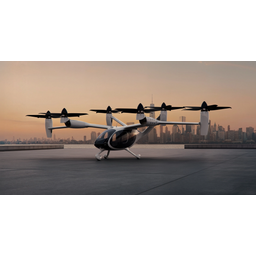
Leader in piloted long-range eVTOL; completed FAA Stage 4 of 5 (2026). Toyota-backed, targeting a 2026 Dubai launch.

Maker of the Midnight eVTOL; FAA MOC accepted, ~6–12 months behind Joby. Backed by Stellantis/United/Boeing; ~$1.7B liquidity.
Reader response
Reactions and comments are reader opinion — unverified, and never part of the newsroom's fact record.
Comments 0
No comments yet — be the first.