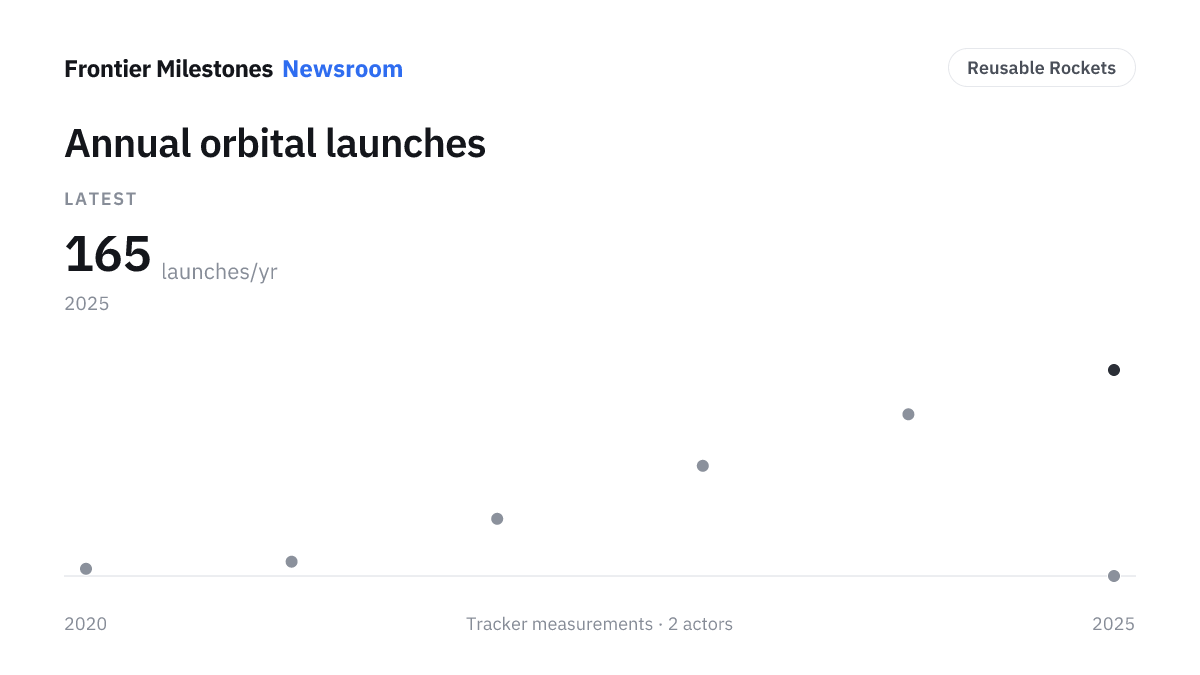
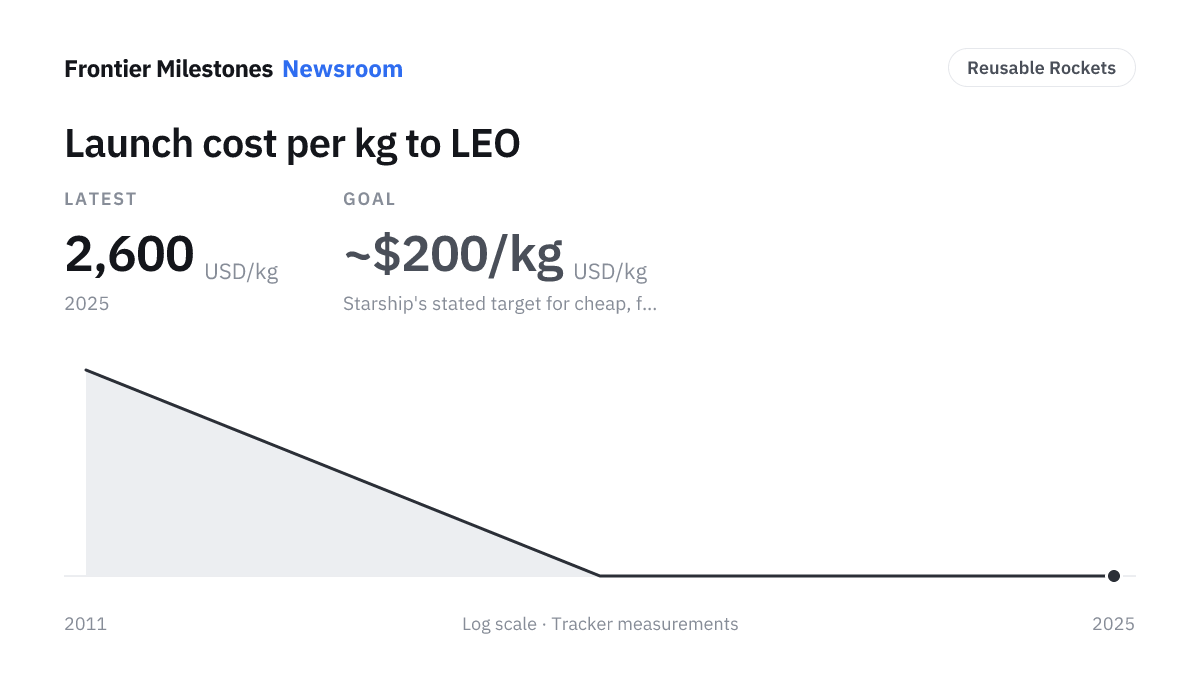
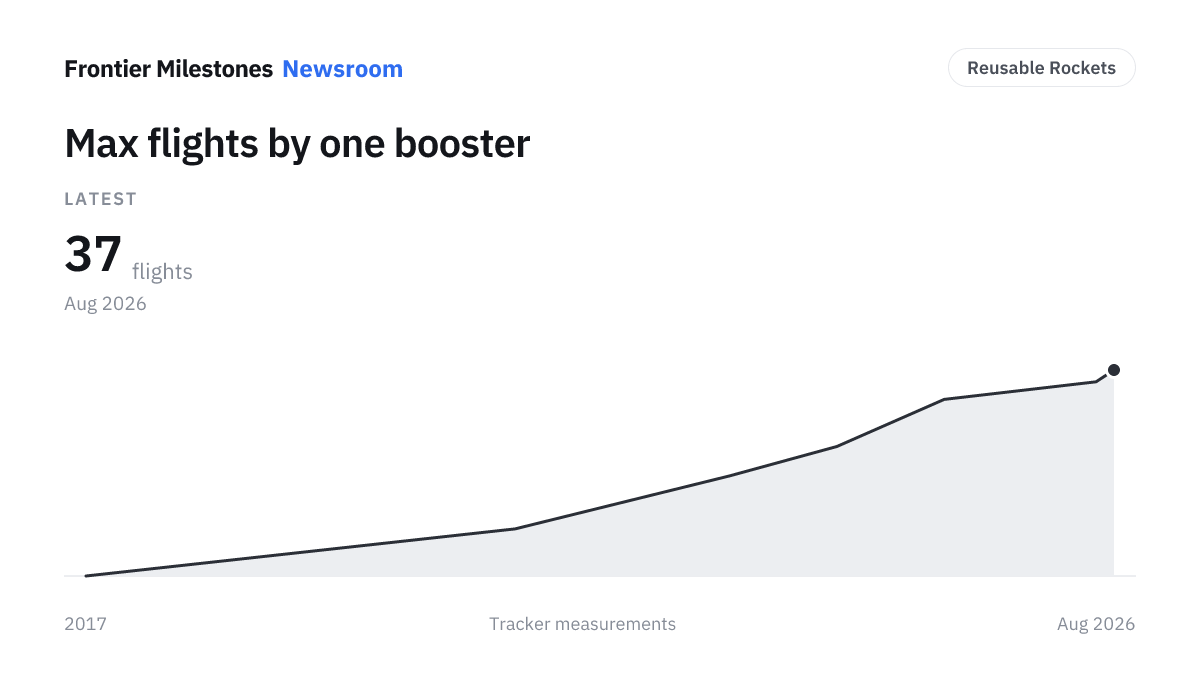
One booster has now flown 37 times, launch costs sit near $2,600/kg against the Shuttle's $54,500, and SpaceX flew 165 orbital missions in 2025 — more than the rest of the world combined. In 2026 Blue Origin and China finally joined the reuse club, and Starship still has not been caught.
Isar Aerospace — Spectrum, Andøya Spaceport, Norway — Isar Aerospace's Spectrum rocket reached orbit on 5 Sep 2026 after lifting off from Andøya Spaceport in northern Norway at 20:12 GMT, settling into an elliptical orbit about seven minutes later. The "Onward and Upward" mission carried five small satellites and Isar confirmed all five separated successfully. It is the first orbital launch ever conducted from European soil — Europe's existing launches fly from Kourou in French Guiana. Spectrum's first flight, in March 2025, failed less than a minute after liftoff; the investigation traced it to an unintended vent-valve opening and loss of attitude control.
SpaceX — Flight 13 ship, near Christmas Island — The ship from Flight 13, which splashed down in the Indian Ocean on 24 Jul 2026, stayed afloat and intact and was pulled from the water near Christmas Island in late August — the first full Starship to survive a test flight and be recovered rather than sink or break up. SpaceX loaded it onto a semisubmersible vessel for a voyage back to Starbase expected to take months. This is salvage, not reuse: the vehicle was recovered from the ocean, not caught by a tower or landed, and nothing recovered this way has been reflown.
SpaceX — Flight 13 (24 Jul 2026), the second V3 flight, cleared what the debut left undone: it deployed a full batch of 20 Starlink V3 satellites (Flight 12 carried mostly mock-ups), relit a Raptor engine in space, and put the ship down in the Indian Ocean in a soft, precise splashdown that SpaceX later judged accurate enough for a tower catch. The booster half did not work: only 10 of 13 engines relit for Super Heavy's landing burn, about five were firing at the end, and Booster 20 was destroyed on impact in the Gulf. Tower catches, reuse and full orbital flight are still ahead.
CASC — The Long March 10B first stage was recovered at sea ~6 minutes after stage separation — four hooks caught a tensioned cable net on the recovery vessel, a legless design CASC says saves mass and widens the capture window. China's first controlled recovery of an orbital launch vehicle, the first net-based one anywhere, and the first orbital-class booster recovery by anyone other than SpaceX and Blue Origin. Reflight is still to come.
SpaceX — SpaceX raised $75B in its IPO (555.6M shares at $135; ~$1.75T valuation), trading on Nasdaq as SPCX from 12 Jun 2026 — the largest IPO in history, dwarfing Saudi Aramco's $29.4B (2019); the book ran >2× oversubscribed (~$150B in orders).
165 launches and a 32-flight booster put SpaceX years ahead, but Blue Origin's New Glenn reuse and Rocket Lab's Neutron are finally real. Our read on how durable the lead is. (Our opinion, not investment advice.)
Our read — labelled opinion, not investment advice.
Blue Origin — A New Glenn first stage exploded during a static-fire test at LC-36, Cape Canaveral (28 May 2026) — destroying the booster and damaging Blue Origin's only New Glenn pad. Reported as the most powerful rocket explosion since the Soviet N1 (1969); no injuries. Blue Origin targets return to flight before end-2026, accelerating a vertical-integration redesign.
SpaceX — SpaceX flew Starship V3 for the first time (Flight 12, 22 May 2026) — its most powerful version, built for high-rate Starlink launches and future Moon missions. The suborbital test deployed 20 mock + 2 real Starlinks and was called a success despite engine glitches and a missed booster splashdown; full orbital flight is still to come.
Dollars per kilogram to orbit is the single figure that decides what becomes possible in space — and it has fallen ~20× since the Shuttle. We explain the number and why headline prices need caveats.
Landing a booster is the photo; flying the same booster again — and again — is the economics. We explain why reflights, not landings, are the metric that lowers the cost of space.
 SpaceX
  Blue Origin
  Rocket Lab