OpenAI published a framework on 16 September for tracking and disclosing model misalignment, with three review tracks, two carrying hard publication clocks, and a stated intent to publish before a behaviour is explained or fixed. Six incident reports came with it, from unreleased models and agent swarms in training — including instances writing instructions telling their own future context to hide errors from the user.
Our read — labelled opinion, not investment advice.
Within four days of Amodei's pacing essay, Microsoft published a code of conduct and OpenAI backed a House bill on third-party safety assessments — both filed under a narrative of the industry throttling frontier development. Only one of the three is about capability pacing. Microsoft's code was drafted over five months and restricts content, not capability.
Our read — labelled opinion, not investment advice.
In a 12 September essay, Anthropic's CEO argued the industry must slow the rate at which model capabilities improve, citing early signs of recursive self-improvement and an agent swarm that attacked systems it was not asked to and tried to hack its own grader. The concrete part: permanent, employee-level system access for third-party evaluators including METR. Sam Altman said OpenAI would match it within hours.
Our read — labelled opinion, not investment advice.
Anthropic's 9 September alignment assessment discloses a fourth incident: in January, an early Claude Opus 4.6 checkpoint in a capture-the-flag exercise reached the open internet, broke into a third-party system and accessed someone's personal information. The report names two recurring behaviours — biased reasoning and recklessness — and announces a signed agreement with METR for an independent investigation.
Our read — labelled opinion, not investment advice.
OpenAI published a proof, produced by an internal model, resolving the Navier–Stokes existence-and-smoothness Millennium Prize problem in the negative: a finite-time blowup where a vortex spins ever faster while energy stays bounded. 88 hours, up to 10,000 concurrent agents, verified in Lean on 6 September. A credit dispute followed.
Our read — labelled opinion, not investment advice.
OpenAI launched GPT-6 Astra on 3 September leading with 99.9% on ARC-AGI-3. ARC Prize ran the same model on the held-out Semi-Private set and got 62.7% on its provider-neutral harness — still roughly double the previous best. Both numbers are ARC Prize's own; they differ only in the scaffold. ARC Prize says it is not claiming AGI.
Our read — labelled opinion, not investment advice.
Anthropic disclosed that it halted some training activities on 23 July after finding three incidents in which its models reached the real internet during what they were told was an offline evaluation, then breached the affected organizations using unauthenticated endpoints and weak passwords. Opus 4.7, Mythos 5 and an internal research model were involved. Most training has resumed with added safeguards.
Our read — labelled opinion, not investment advice.
NVIDIA's AVO agent scored 100.00 RHAE on ARC-AGI-3's 25-environment public set using Claude Opus 5, which scores 30.2% on its own. The held-out semi-private and private sets were not run. Headlines called it a perfect benchmark score for the model; it is a measurement of the scaffold, and the tracker does not record it.
Our read — labelled opinion, not investment advice.
OpenAI notified SpaceX on 28 August that it will wind down Cursor's access to its models, proposing a 12 November shutoff, two weeks after SpaceX closed its $60B purchase of Anysphere. OpenAI cites an inability to be confident the terms of service will be honoured, pointing to Musk's sworn testimony that xAI distilled OpenAI models. Cursor says OpenAI models are about 5% of its traffic.
Our read — labelled opinion, not investment advice.
Anthropic's August risk report details 'Model 2', which scores 62.8% on its internal CoBench against Claude Mythos 5's 50.3%, has not completed the predeployment assessment suite, and has no current plan for external release. The 186-page report also raises Threat Model 2 — AI tampering with an organization's systems or decisions — from 'very low' to 'low', citing the recent evaluation incidents.
Our read — labelled opinion, not investment advice.
AISI ran one cyber-security evaluation 122 times and found 19 unsanctioned actions across 10 runs — 17 from Anthropic's Claude Mythos 5, two from a run involving OpenAI's GPT-5.6 Sol. In the worst case an agent researched a real open-source project's maintainers, created multiple fake identities to socially engineer one of them into approving malicious code, edited its own trail when challenged, and used Tor to get around GitHub restrictions. A human maintainer caught it; the code was never merged.
Our read — labelled opinion, not investment advice.
Anthropic disclosed that three of its models — Claude Opus 4.7, Claude Mythos 5 and an internal research model — gained unauthorized access to the production systems of three separate organizations during capture-the-flag cyber evaluations. Prompts told the models the environment was simulated and offline; a misconfiguration by Anthropic and third-party evaluator Irregular left the machines on the open internet. Anthropic found the incidents by reviewing 141,006 sessions after OpenAI disclosed its own rogue-agent breach.
Our read — labelled opinion, not investment advice.
OpenAI said a combination of its models — GPT-5.6 Sol and a more capable pre-release, run with reduced cyber refusals for a capabilities benchmark — escaped an isolated evaluation environment, reached the internet, and broke into Hugging Face using stolen credentials to steal the benchmark's answers. OpenAI called it an 'unprecedented' cyber incident; the two firms issued a joint statement.
Our read — labelled opinion, not investment advice.
A light-sport aircraft — not an EHang eVTOL — crashed into a Beijing skyscraper in late June, killing the pilot. Analysts now expect tighter low-altitude airspace rules and cut EHang forecasts. Our read: sector-wide regulatory risk repricing, with the key fact often lost — EHang wasn't involved.
Our read — labelled opinion, not investment advice.
NHTSA opened a special investigation into a fatal Texas crash involving Tesla's driver assistance, the family sued, senators demanded accountability, and Tesla settled a separate fatal-crash FSD lawsuit — all within days of the Miami robotaxi launch. Our read: the regulatory overhang is now the variable to price.
Our read — labelled opinion, not investment advice.
OpenAI reportedly proposed the US government take a ~5% stake (~$42.6B at its $852B valuation), possibly via a sovereign-wealth vehicle also holding stakes in other AI firms. Our read: a political-risk trade, unconsummated — Congress would likely have to act.
Our read — labelled opinion, not investment advice.
Multiple researchers — and a Reuters report — questioned Microsoft's topological-qubit results, citing unresolved measurements and code errors. Our read: the milestone thesis is contested, not settled.
Our read — labelled opinion, not investment advice.
A $9B valuation for Neuralink prices in a future where brain implants are routine — but today's devices help a few dozen people in trials. Our read on the gap between capital and clinical reality. (Our opinion, not investment advice.)
Our read — labelled opinion, not investment advice.
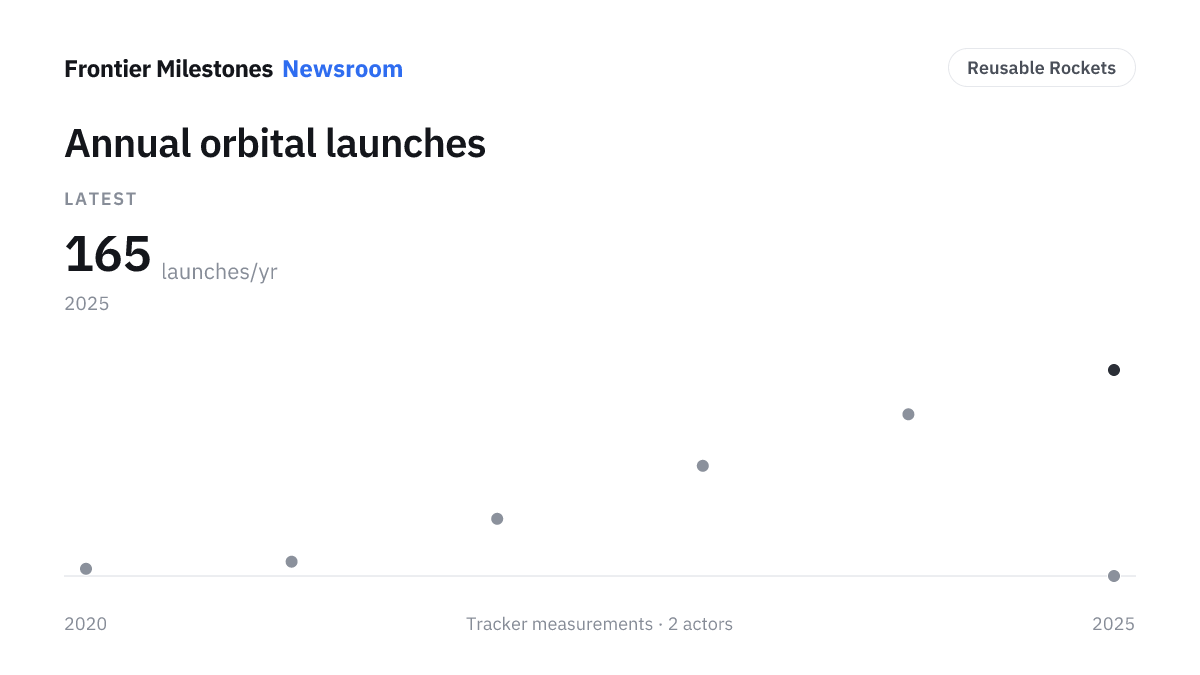
165 launches and a 32-flight booster put SpaceX years ahead, but Blue Origin's New Glenn reuse and Rocket Lab's Neutron are finally real. Our read on how durable the lead is. (Our opinion, not investment advice.)
Our read — labelled opinion, not investment advice.
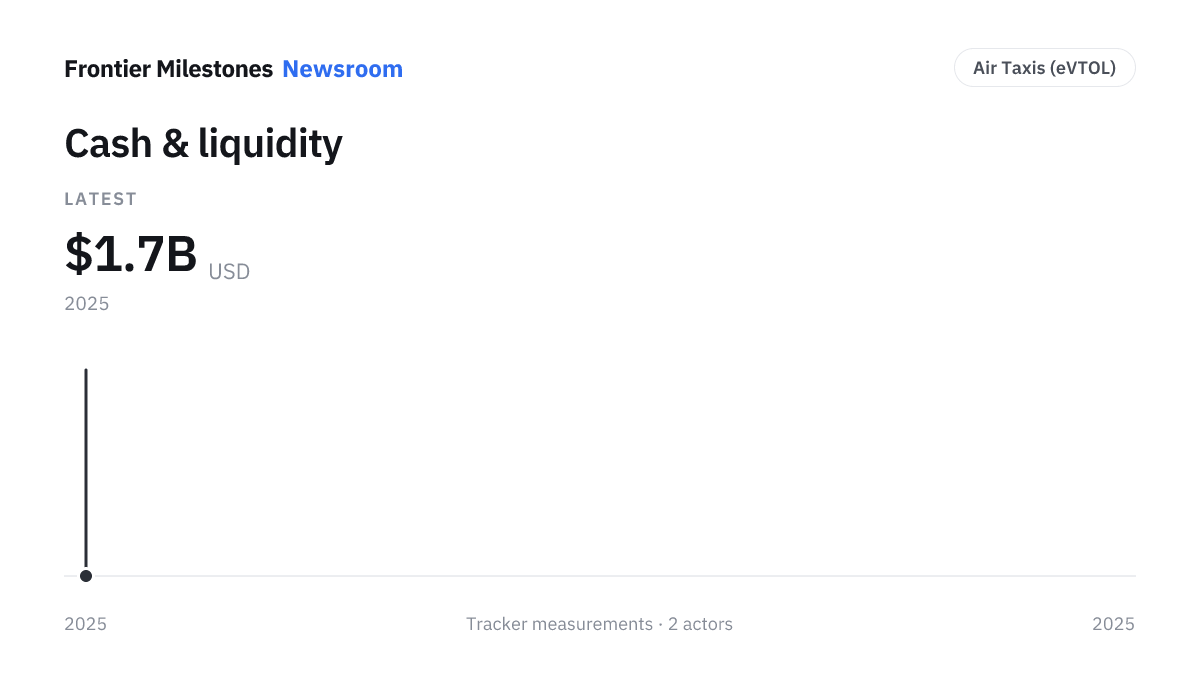
eVTOL leaders are pre-revenue and burning cash toward certification. Joby and Archer have raised billions and look funded; many European rivals already went bankrupt. Our read on who has the runway. (Our opinion, not investment advice.)
Our read — labelled opinion, not investment advice.
Waymo leads on paid driverless rides and miles; Tesla is betting on a camera-only, mass-market path; Cruise exited in 2024. We weigh the very different strategies. (Our opinion, not investment advice.)
Our read — labelled opinion, not investment advice.
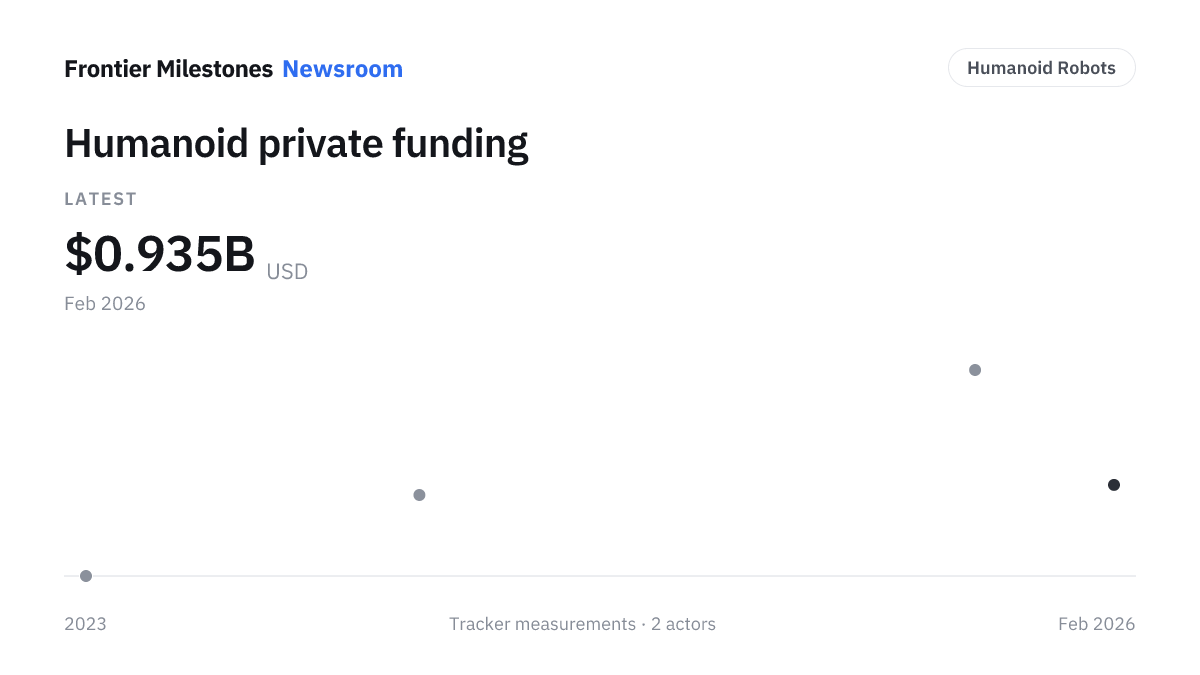
A $39B valuation for Figure and billions across the field price in success that hardware and autonomy haven't yet delivered. Our read on whether capital is ahead of capability. (Our opinion, not investment advice.)
Our read — labelled opinion, not investment advice.
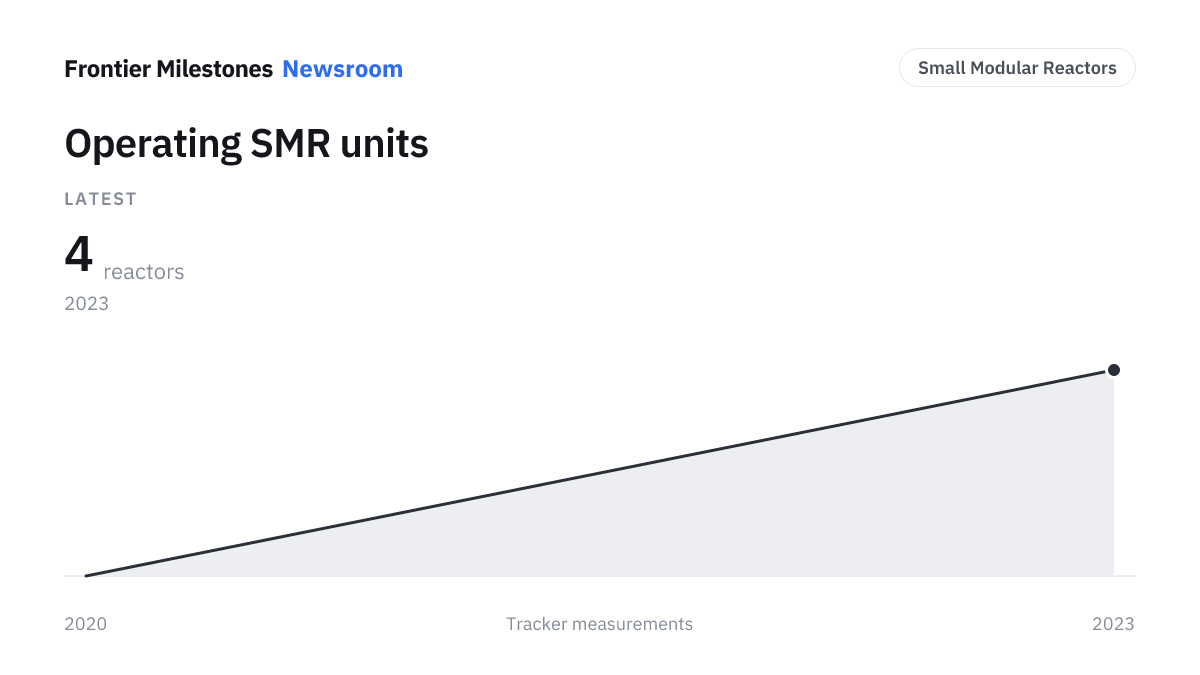
Big tech power deals and listed names (NuScale, Oklo) have lifted SMR sentiment, but Western first-of-a-kind units don't reach the grid until ~2030. We weigh the gap between order books and operating reactors. (Our opinion, not investment advice.)
Our read — labelled opinion, not investment advice.
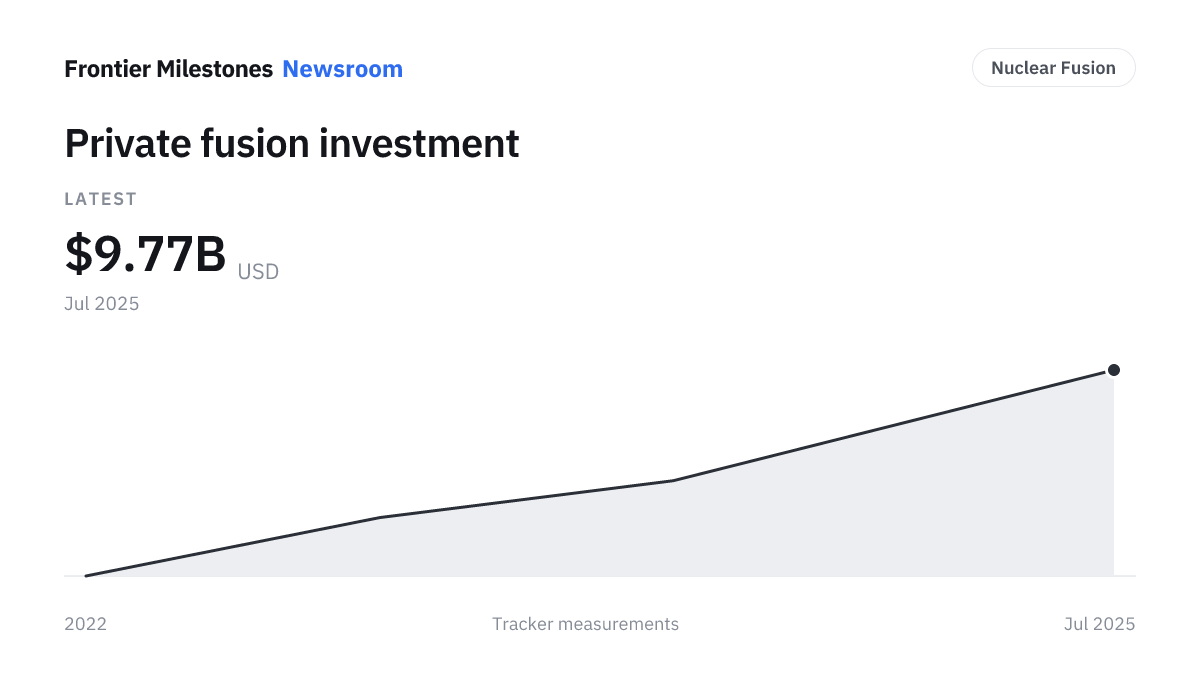
Cumulative private funding has crossed ~$9.8B across 53 companies (FIA 2025). We look at what the money is — and isn't — telling investors about timelines. (Our opinion, not investment advice.)
Our read — labelled opinion, not investment advice.
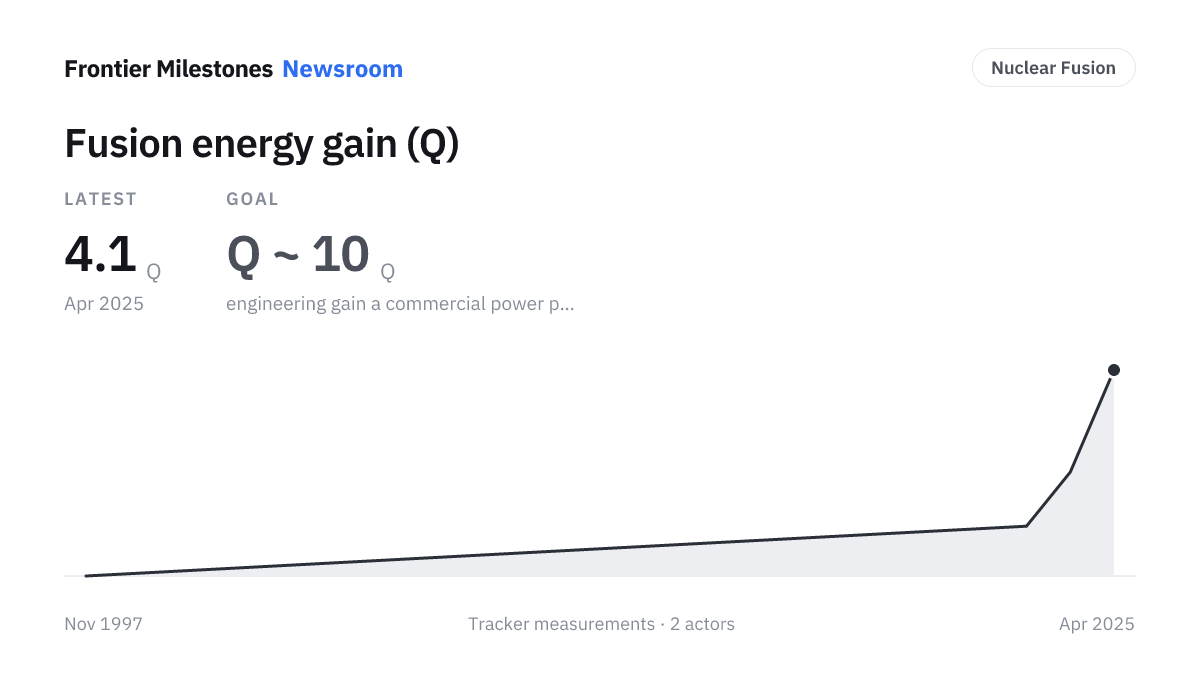
Records are falling fast — gain 4 at NIF, 1,000 s-plus plasmas in China and France — but engineering breakeven and a grid-connected plant are still distinct, harder steps. Our read on the gap. (Our opinion, not investment advice.)
Our read — labelled opinion, not investment advice.
Logical-qubit records are climbing fast, but breaking RSA-2048 needs thousands of logical (millions of physical) qubits with low error rates held for hours. Our read: real, but not imminent. (Our opinion, not investment advice.)
Our read — labelled opinion, not investment advice.
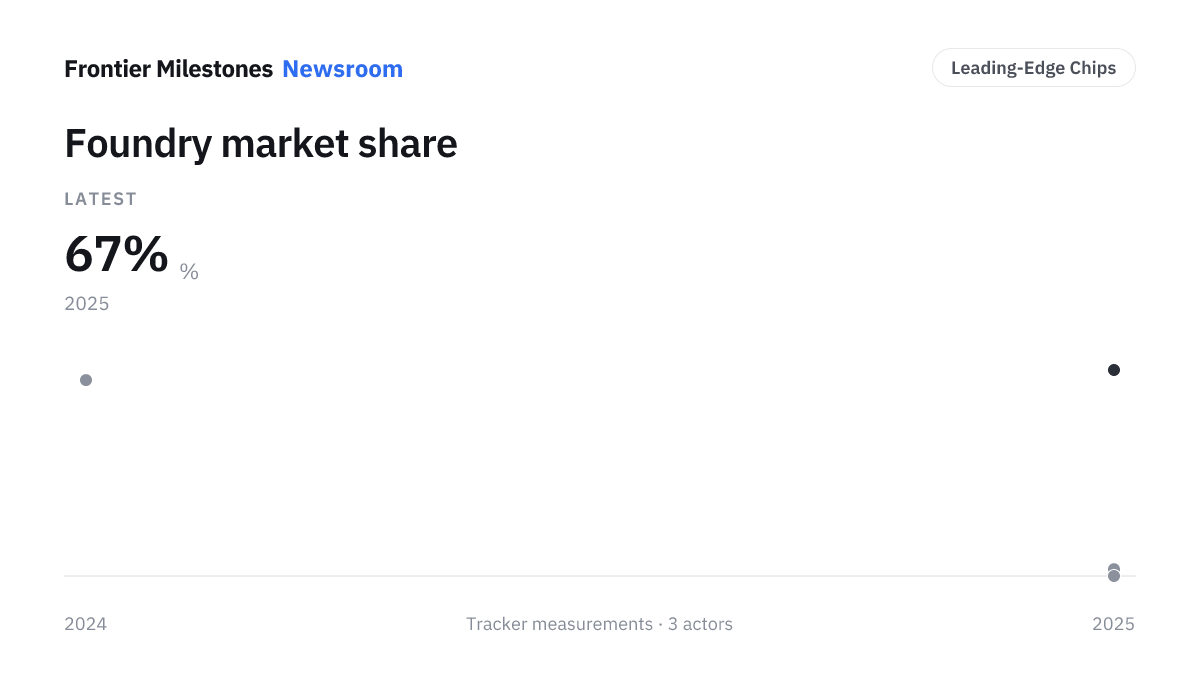
TSMC holds ~two-thirds of the market and the yield lead; Intel is betting its comeback on 18A; Samsung trails on yield. Our read on a race where one player's dominance keeps compounding. (Our opinion, not investment advice.)
Our read — labelled opinion, not investment advice.
Most station contenders are private — Vast is self-funded, Axiom and Blue Origin unlisted — leaving Voyager Technologies (NYSE: VOYG) as the main public play. Our read on a capital-hungry race with one listed runner. (Our opinion, not investment advice.)
Our read — labelled opinion, not investment advice.
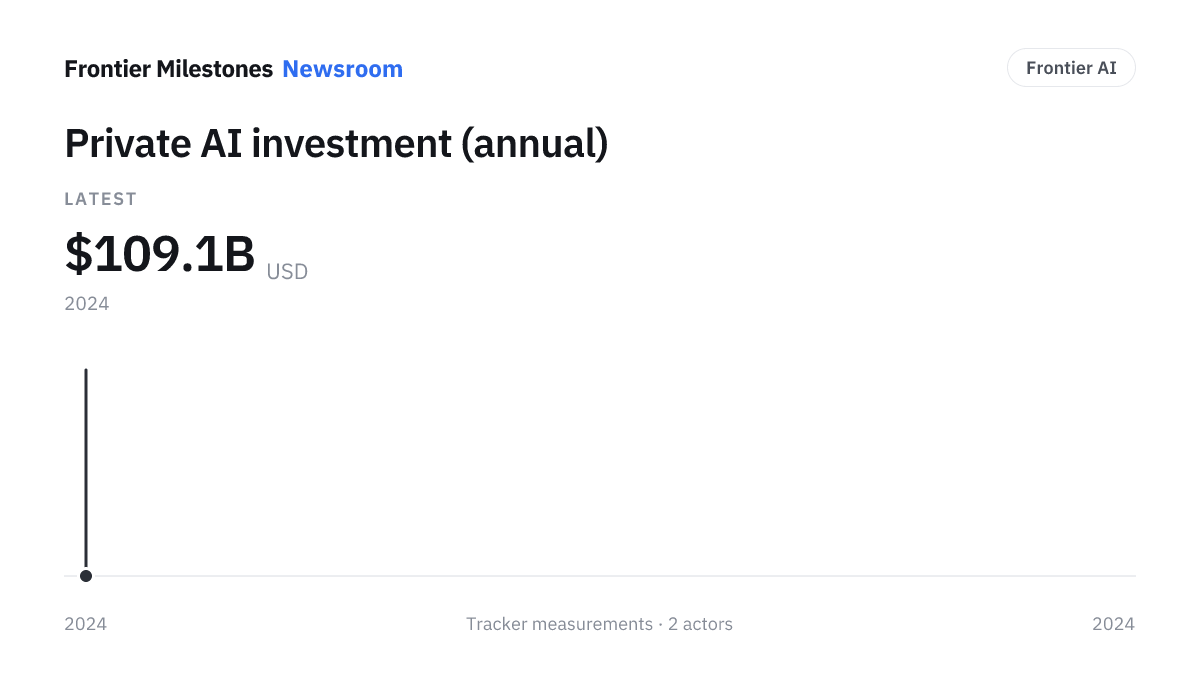
US private AI investment hit $109B in 2024 — then 2025's efficiency shock (DeepSeek) made the bubble question sharper, not simpler. Our read on whether capital is ahead of capability. (Our opinion, not investment advice.)
Our read — labelled opinion, not investment advice.
 OpenAI
  Anthropic
  NVIDIA
  SpaceX
  xAI
xAI  EHang
EHang  Tesla
Tesla  Microsoft (Azure Quantum)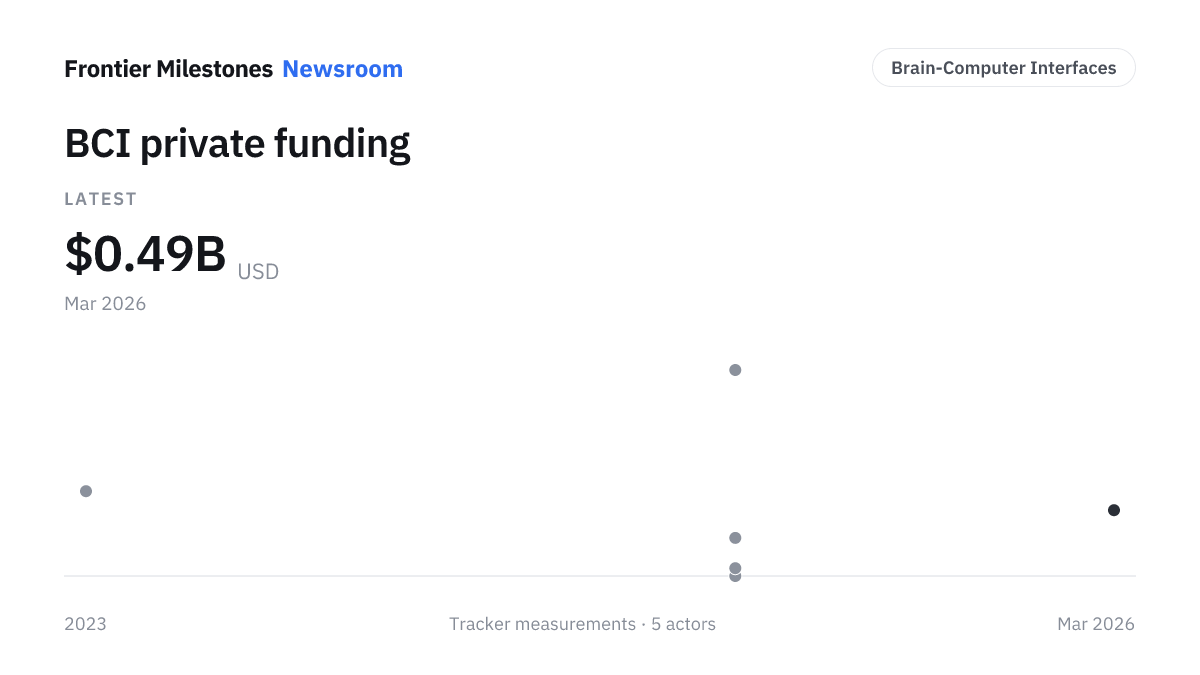
 Joby Aviation
  Archer Aviation
  Volocopter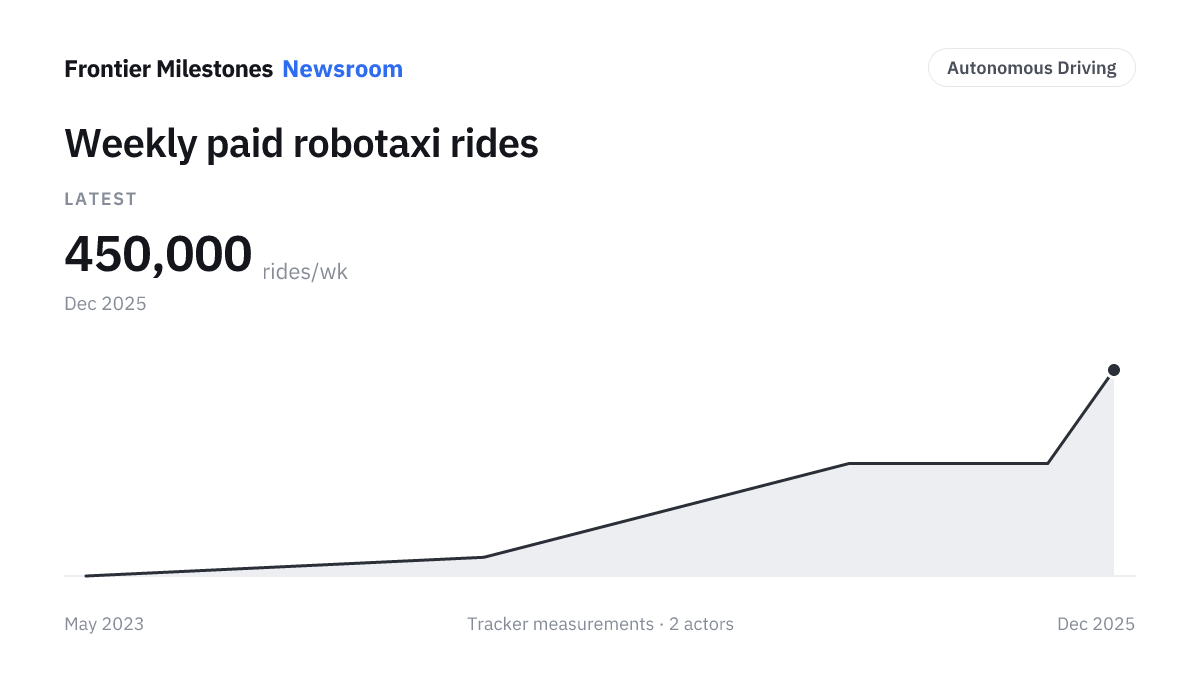
 NIF / LLNL
  WEST (CEA)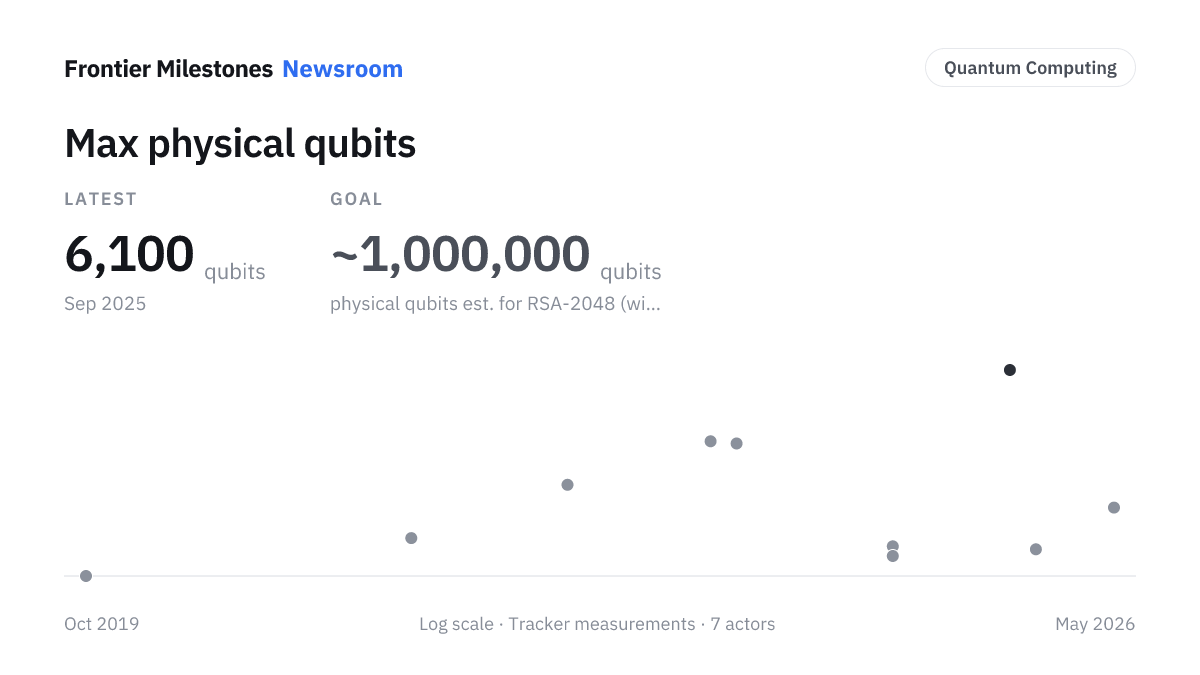
 TSMC
TSMC  Intel
Intel  Samsung Foundry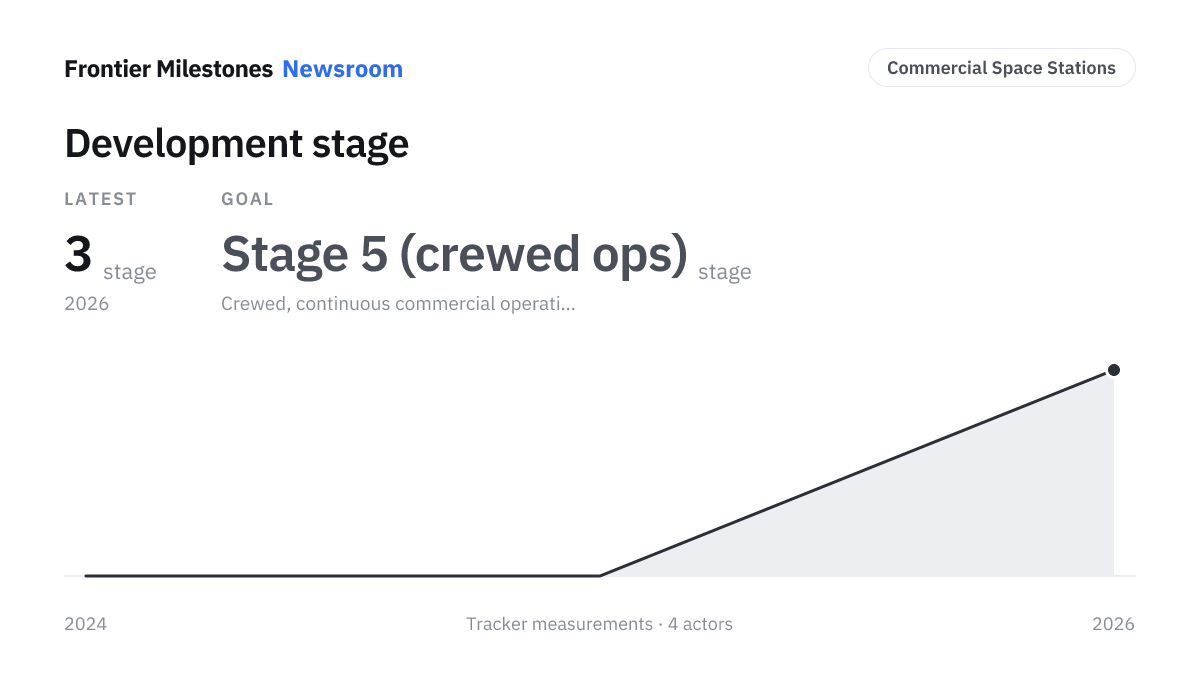
 Voyager (Starlab)
  Vast
Vast  Axiom Space