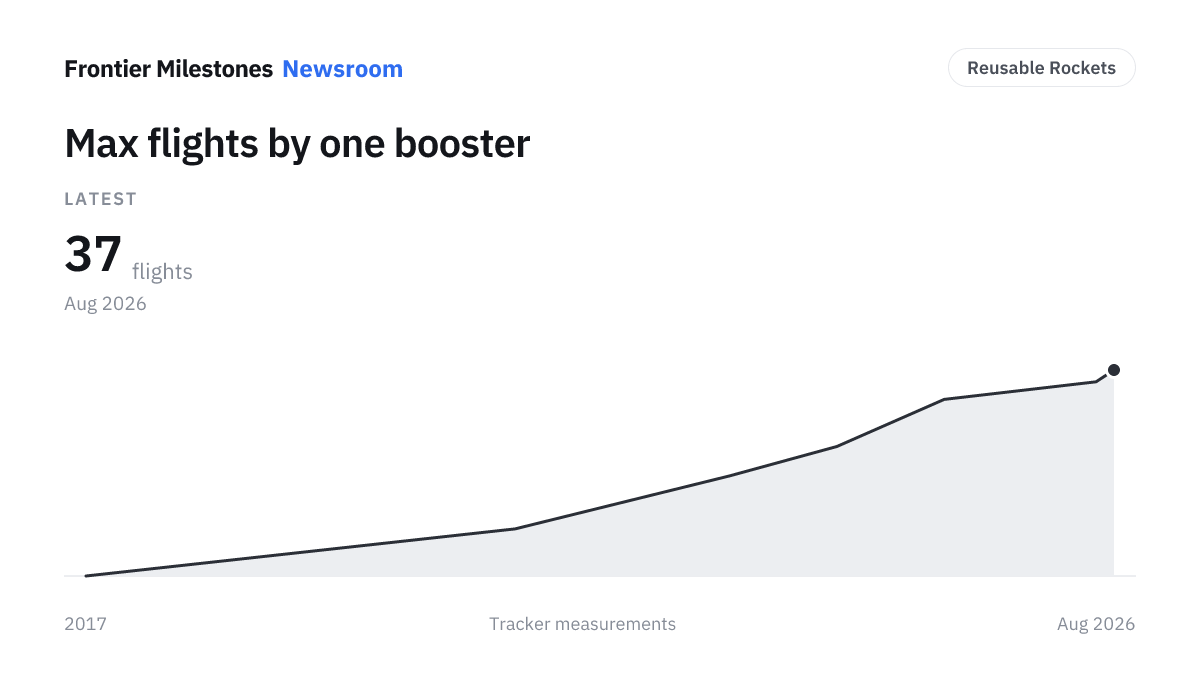
One booster has now flown 37 times, launch costs sit near $2,600/kg against the Shuttle's $54,500, and SpaceX flew 165 orbital missions in 2025 — more than the rest of the world combined. In 2026 Blue Origin and China finally joined the reuse club, and Starship still has not been caught.
No commercial space station is in orbit. Vast leads at development stage 3 with Haven-1 now slipped to Q1 2027, while the ISS is planned to deorbit around 2030 — the tightest schedule risk on this tracker.
Blue Origin is raising about $10B at a $130B pre-money valuation — its first outside capital ever, led by Coatue (~$4B) with Bezos adding ~$2B — weeks after the New Glenn pad explosion, funding the push to return to flight by end of 2026.
Blue Origin — A New Glenn first stage exploded during a static-fire test at LC-36, Cape Canaveral (28 May 2026) — destroying the booster and damaging Blue Origin's only New Glenn pad. Reported as the most powerful rocket explosion since the Soviet N1 (1969); no injuries. Blue Origin targets return to flight before end-2026, accelerating a vertical-integration redesign.
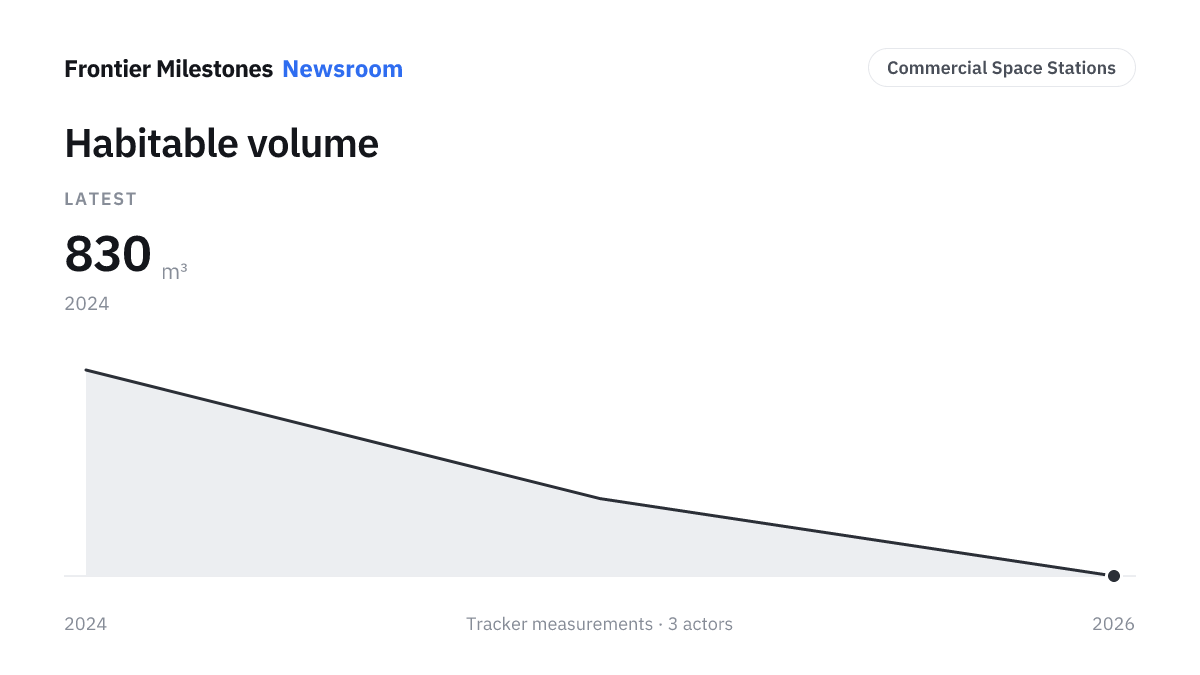
Station spec sheets range from Vast's 45 m³ Haven-1 to Blue Origin's 830 m³ Orbital Reef. Almost all of these are design figures, not flown hardware — here is how to read them against the ISS's ~916 m³.

 SpaceX
  Rocket Lab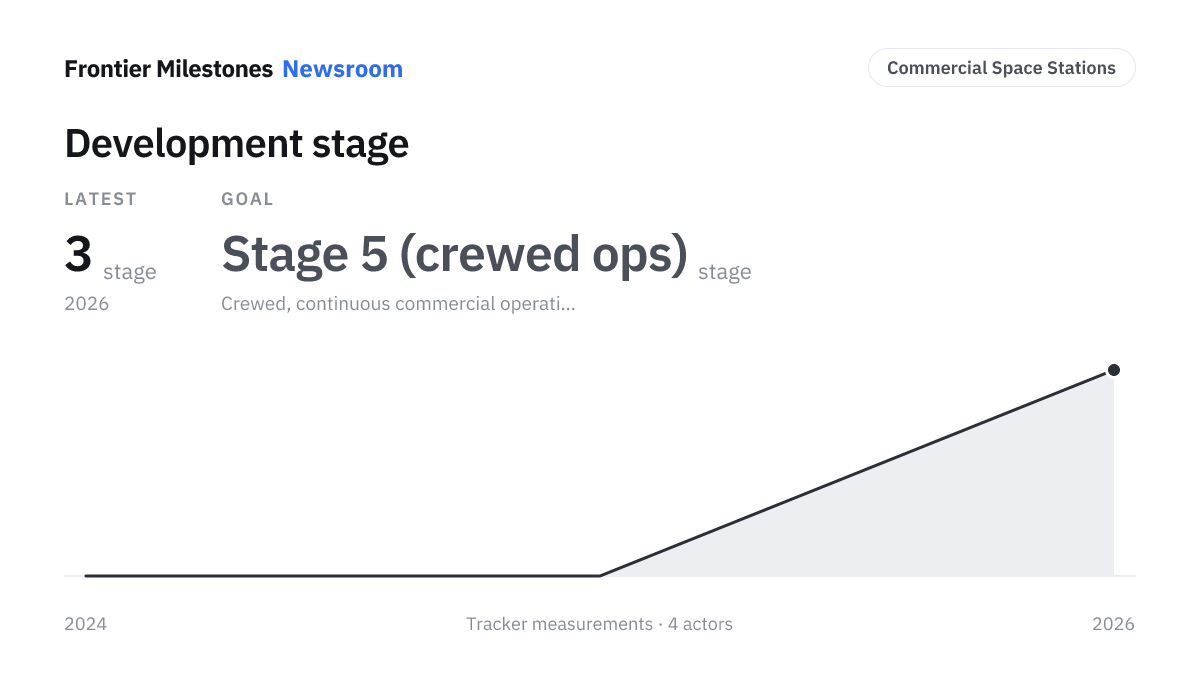
 Vast
Vast  Axiom Space
  Voyager (Starlab)