The launch leader that made reusable flight routine with Falcon 9/Heavy; developing Starship. 165 orbital launches in 2025. Went public on Nasdaq (SPCX) in June 2026 in the largest IPO ever (~$75B raised, ~$1.75T valuation).
Eutelsat authorised Airbus to build 229 more OneWeb satellites on 10 September, an estimated €1B, taking its refresh order to 669 spacecraft across three tranches and extending network continuity to 2034. Separately it named Aerospacelab prime contractor for 264 IRIS² platforms under a €2.4B contract.
Stoke Space closed a $1B Series E co-led by Point72 Ventures and Spark Capital, taking total funding to $2.3B. It targets early 2027 for the first orbital flight of Nova Pathfinder (3 t to LEO) and unveiled Nova Block 2, a 15 t vehicle aimed at 2029. No Stoke vehicle has reached orbit.
One booster has now flown 37 times, launch costs sit near $2,600/kg against the Shuttle's $54,500, and SpaceX flew 165 orbital missions in 2025 — more than the rest of the world combined. In 2026 Blue Origin and China finally joined the reuse club, and Starship still has not been caught.
Starlink operates about 8,000 satellites serving several million subscribers, with roughly 600 capable of connecting ordinary phones. In August 2026 AST SpaceMobile switched on the first commercial direct-to-cell service outside the US, with Rakuten in Japan.
Booster B1067 flew its 37th mission on 25 August, carrying 29 Starlink satellites from Cape Canaveral and landing on the droneship A Shortfall of Gravitas. It was also the 100th Falcon 9 flight of 2026. The previous record, 36, was set in July by the same booster.
OpenAI notified SpaceX on 28 August that it will wind down Cursor's access to its models, proposing a 12 November shutoff, two weeks after SpaceX closed its $60B purchase of Anysphere. OpenAI cites an inability to be confident the terms of service will be honoured, pointing to Musk's sworn testimony that xAI distilled OpenAI models. Cursor says OpenAI models are about 5% of its traffic.
Our read — labelled opinion, not investment advice.
SpaceX and Louisiana announced Starbase Louisiana on 25 August: a 125,000-acre site on Pecan Island in Vermilion Parish, $100B of investment, ten Starship pads, construction from 2027 and a first launch targeted for 2029. It would be SpaceX's fourth US launch location and its second Starbase.
SpaceX — Flight 13 ship, near Christmas Island — The ship from Flight 13, which splashed down in the Indian Ocean on 24 Jul 2026, stayed afloat and intact and was pulled from the water near Christmas Island in late August — the first full Starship to survive a test flight and be recovered rather than sink or break up. SpaceX loaded it onto a semisubmersible vessel for a voyage back to Starbase expected to take months. This is salvage, not reuse: the vehicle was recovered from the ocean, not caught by a tower or landed, and nothing recovered this way has been reflown.
SpaceX and Nvidia said they are jointly developing the compute payload for Starmind AI1, a satellite carrying Nvidia Rubin GPUs and Vera CPUs in a Vera Rubin NVL72 rack-scale system. SpaceX committed to Nvidia exclusively for its next generation of AI infrastructure, with production at its Bastrop, Texas Gigasat factory and first deployments targeted as early as 2027.
SpaceX's Starship Flight 13 succeeded on July 24 — the second flight of the V3 vehicle. It deployed all 20 Starlink V3 satellites (Flight 12 carried mostly mock-ups), relit a Raptor in space, and brought both the Super Heavy booster (Gulf) and the ship (Indian Ocean) to controlled splashdowns — the booster recovery that Flight 12 missed.
SpaceX — Flight 13 (24 Jul 2026), the second V3 flight, cleared what the debut left undone: it deployed a full batch of 20 Starlink V3 satellites (Flight 12 carried mostly mock-ups), relit a Raptor engine in space, and put the ship down in the Indian Ocean in a soft, precise splashdown that SpaceX later judged accurate enough for a tower catch. The booster half did not work: only 10 of 13 engines relit for Super Heavy's landing burn, about five were firing at the end, and Booster 20 was destroyed on impact in the Gulf. Tower catches, reuse and full orbital flight are still ahead.
CASC's Long March 10B, launched from Hainan, recovered its first-stage booster at sea about six minutes after stage separation — caught by a net-and-hook system rather than landing on legs, China's first controlled recovery of an orbital launch vehicle and the first net-based one anywhere. Only SpaceX (routinely) and Blue Origin (since Nov 2025) had landed orbital-class boosters.
SpaceX — SpaceX raised $75B in its IPO (555.6M shares at $135; ~$1.75T valuation), trading on Nasdaq as SPCX from 12 Jun 2026 — the largest IPO in history, dwarfing Saudi Aramco's $29.4B (2019); the book ran >2× oversubscribed (~$150B in orders).
SpaceX — SpaceX flew Starship V3 for the first time (Flight 12, 22 May 2026) — its most powerful version, built for high-rate Starlink launches and future Moon missions. The suborbital test deployed 20 mock + 2 real Starlinks and was called a success despite engine glitches and a missed booster splashdown; full orbital flight is still to come.
SpaceX / T-Mobile — Starlink's first direct-to-cell satellites sent text messages to ordinary, unmodified phones — the opening of the phone-to-satellite era.
 Eutelsat (OneWeb)
  Stoke Space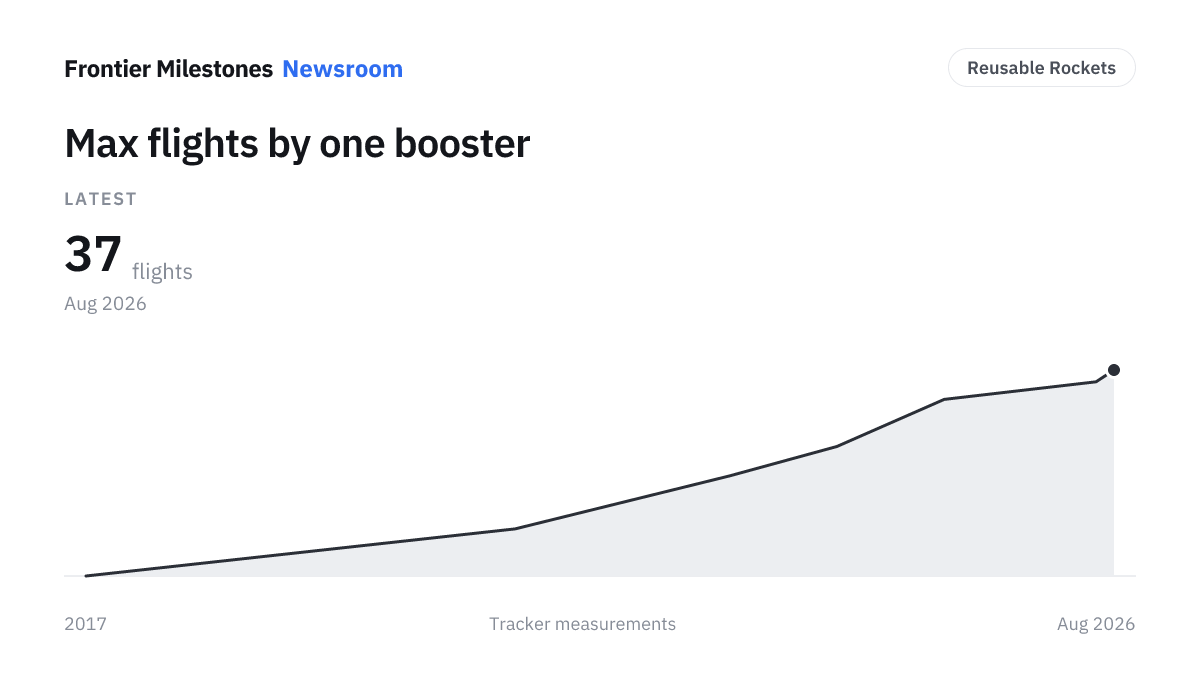
 Blue Origin
  Rocket Lab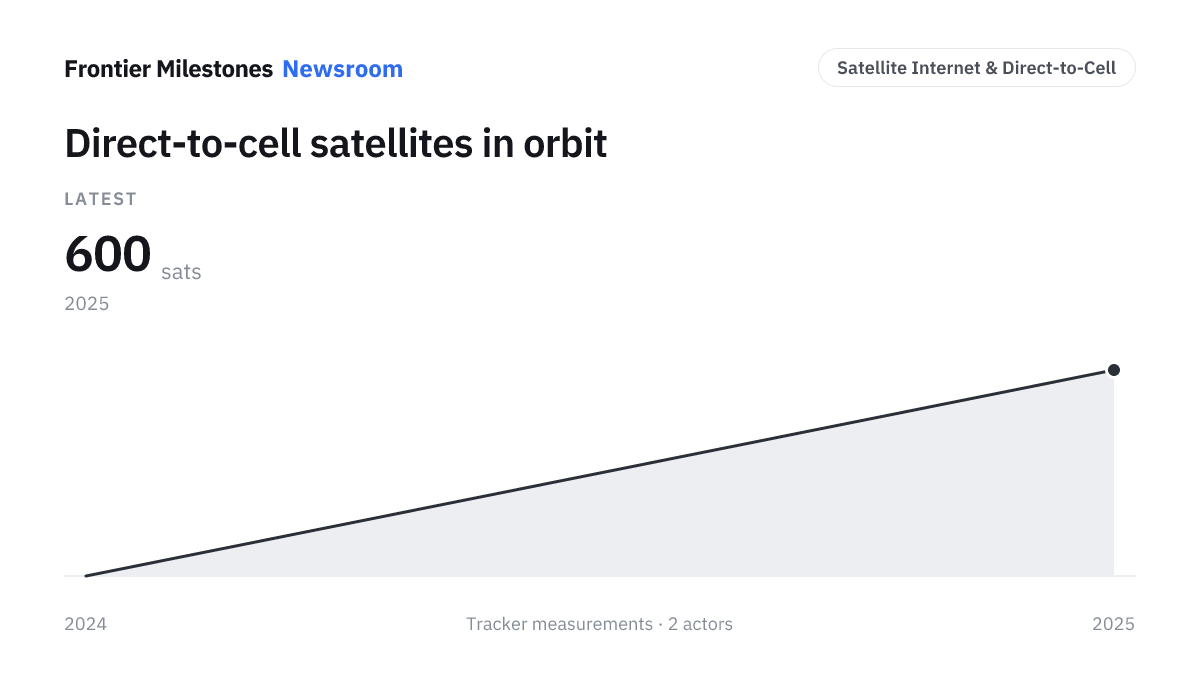
 AST SpaceMobile
  OpenAI
  xAI
xAI  NVIDIA