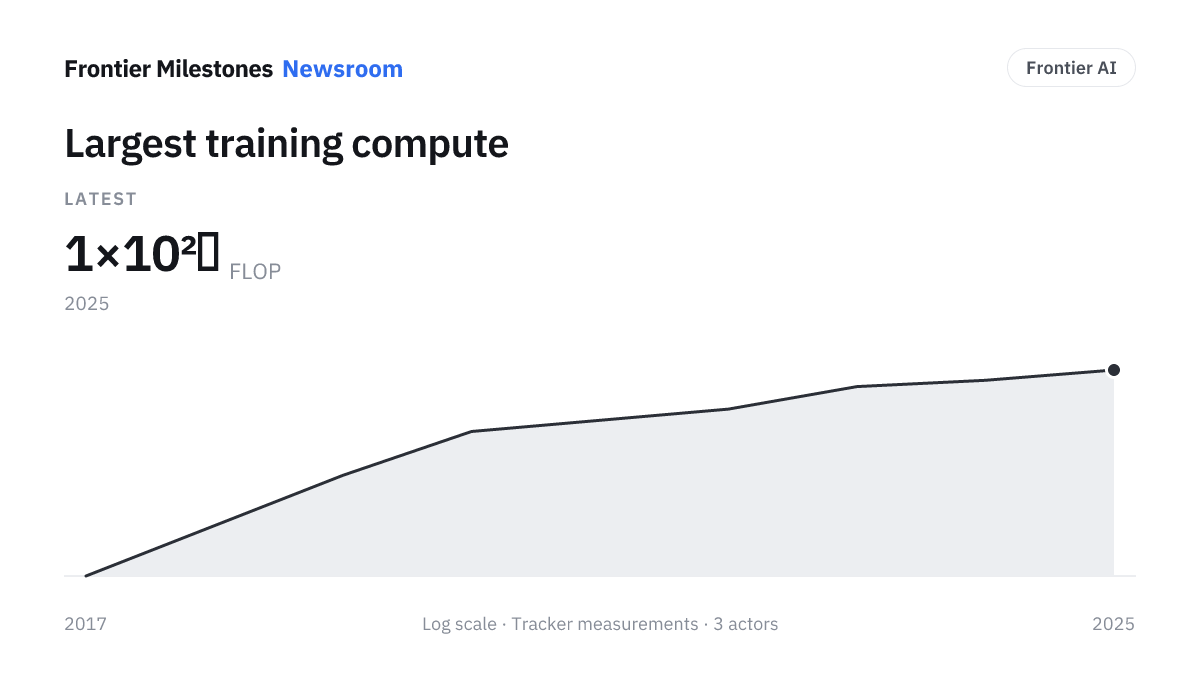
Training compute passed 1e26 FLOP and grows 4–5× a year, and in 2026 a frontier model was export-controlled like a strategic technology for the first time. The benchmarks keep moving: ARC-AGI-3 launched with every model under 1%, then one reached 30.2%.
DeepSeek released V4-Pro-0813 out of preview, focused on agentic tool use and multi-step work, and simultaneously raised API prices across the V4 family by 50% to 1,100% depending on model, token type and time of day. Peak V4-Pro output goes to $3.96 per million tokens from a flat $0.87, with off-peak rates at half of peak, effective 16 August.
DeepSeek put ¥140.8M ($20.8M) into Unitree's Shanghai IPO as a strategic placement — 933,399 shares, 2.31% of the placement — alongside an agreement to jointly develop AI models for humanoid robots. Unitree gives DeepSeek preference for model-training services; DeepSeek gives Unitree preference when buying robots.
DeepSeek released the public beta of V4-Flash (build 0731): the same 284B-total/13B-active MoE architecture as the April preview, with gains coming entirely from re-post-training. It scores above DeepSeek's own V4-Pro-Preview on all nine published agent and coding benchmarks, speaks OpenAI's Responses API format natively, and works with Codex from day one. OpenAI cut prices days earlier.
DeepSeek has begun IPO preparations — a mainland China filing as soon as late 2026 for a 2027 debut — while raising a new private round, now firmed up by Reuters at up to ¥50B at a ~¥500B (~$74B) valuation, weeks after its first external round ($7.4B).
Frontier training compute has grown ~4–5× a year and is the clearest driver of AI's recent leaps. It is a hard, auditable number — but it's an input, not a measure of intelligence.
DeepSeek / Huawei — DeepSeek's 1.6T-parameter V4 runs on Huawei Ascend (950PR), and a Huawei-led team completed full-parameter post-training on ~1,000 Ascend 910Cs — a compute-sovereignty landmark. Pre-training hardware remains undisclosed, so "trained without Nvidia" is NOT established.
US private AI investment hit $109B in 2024 — then 2025's efficiency shock (DeepSeek) made the bubble question sharper, not simpler. Our read on whether capital is ahead of capability. (Our opinion, not investment advice.)
Our read — labelled opinion, not investment advice.
DeepSeek (R1) — DeepSeek-R1, an openly released RL-trained reasoning model, matched leading closed models on math and coding — triggering a market reckoning over AI capex.
 OpenAI
  Anthropic
  Unitree
  Meta AI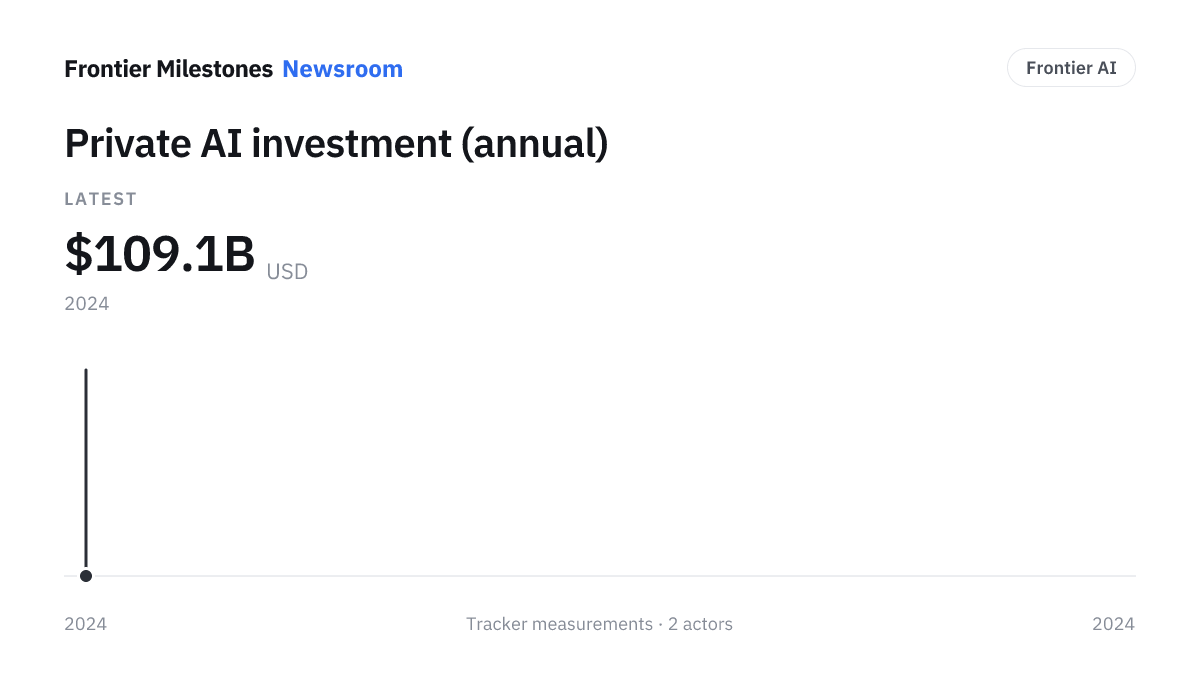
 xAI
xAI