Qualcomm and Amazon announced a multi-generational data-centre collaboration on 8 September. The widely quoted $4B is not Amazon buying chips: it is warrants Qualcomm issued to Amazon for 25 million shares at $161.26, vesting against up to $60B of business. Qualcomm rose about 10%.
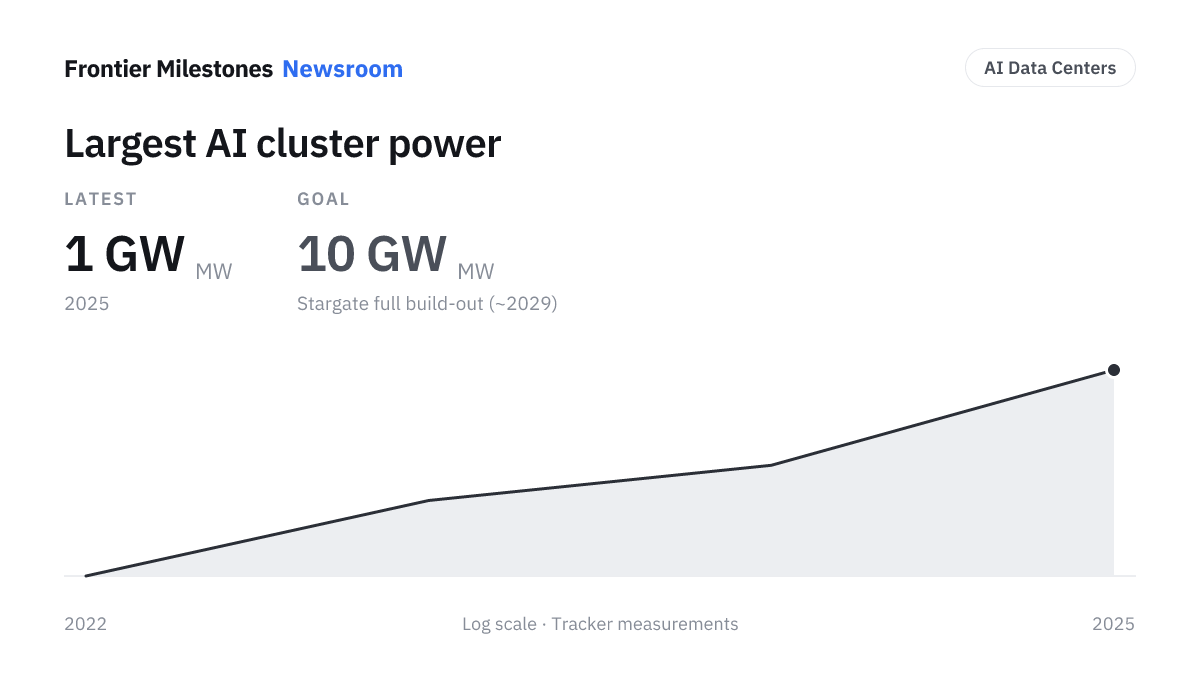
Frontier clusters went from 150 MW in 2023 to gigawatt-class in 2025, and the binding constraint is now power rather than chips. Four hyperscalers guide over $300B a year combined — the fastest capex ramp in corporate history.
Starlink operates about 8,000 satellites serving several million subscribers, with roughly 600 capable of connecting ordinary phones. In August 2026 AST SpaceMobile switched on the first commercial direct-to-cell service outside the US, with Rakuten in Japan.
AWS and Nvidia announced 2 million additional GPUs — Blackwell Ultra, Rubin and Rubin Ultra — for deployment across 2027–2028, taking the committed total from more than 1 million to more than 3 million. The earlier 1M commitment, made at GTC 2026 for deployment starting this year, was exhausted ahead of schedule. The deal also covers 100,000 GPUs of secure AI-factory capacity for the US government.
Amazon's Kuiper unit filed with the FCC to deploy up to 5,105 low-Earth-orbit satellites for 'Amazon Leo' direct-to-device service — voice, messaging and broadband to unmodified phones over Globalstar spectrum (Amazon is acquiring Globalstar for ~$11.6B). Deployment targets 2028, opening a third major D2D front.
AWS (Project Rainier) / Anthropic — AWS activated Project Rainier — nearly 500,000 of its own Trainium2 chips across multiple US data centers, one of the world's largest AI compute clusters and the biggest built on custom silicon rather than Nvidia GPUs. Anthropic trains and serves Claude on it (>5x its previous training compute), scaling toward 1M+ Trainium2 chips — a proof point that frontier-scale compute can run on a hyperscaler's in-house accelerators.

 xAI
xAI  Meta AI
  Microsoft (Azure Quantum)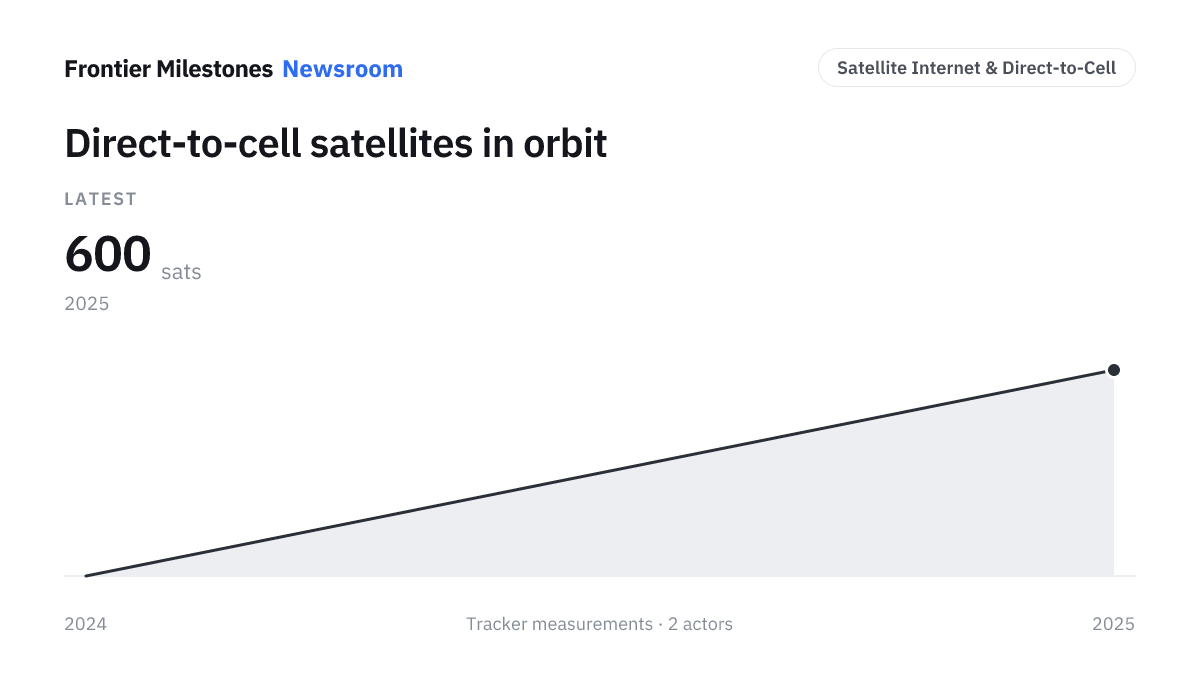
 SpaceX
  AST SpaceMobile
  Eutelsat (OneWeb)
  NVIDIA