On October 7 DARPA advanced Atom Computing, Diraq, IBM and IonQ to Stage C, the final phase of its Quantum Benchmarking Initiative, where government evaluators physically test each company's hardware to judge whether it can reach utility scale by 2033. They join Microsoft and PsiQuantum. Neutral atoms, silicon spins, superconducting circuits, trapped ions, topological qubits and photonics will now be measured by the same outside party.
Helion changed its website from saying Orion, the fusion plant contracted to supply Microsoft, would produce electricity by 2028 to saying it will "begin initial operations in 2028". A spokesperson said the plant would "in no universe" reach its full 50 MW in 2028, putting full power in 2029 or 2030, and the goal for the Polaris prototype changed from net electricity to demonstrating electricity from fusion.
Microsoft opened a 15,000-square-foot quantum center in the University of Maryland's Discovery District on September 22, with a DARPA workspace where agency staff can physically install hardware and run their own startup procedures on the Majorana 2 system, for independent testing under the Quantum Benchmarking Initiative. The claim being tested is one physicists have disputed since 2025.
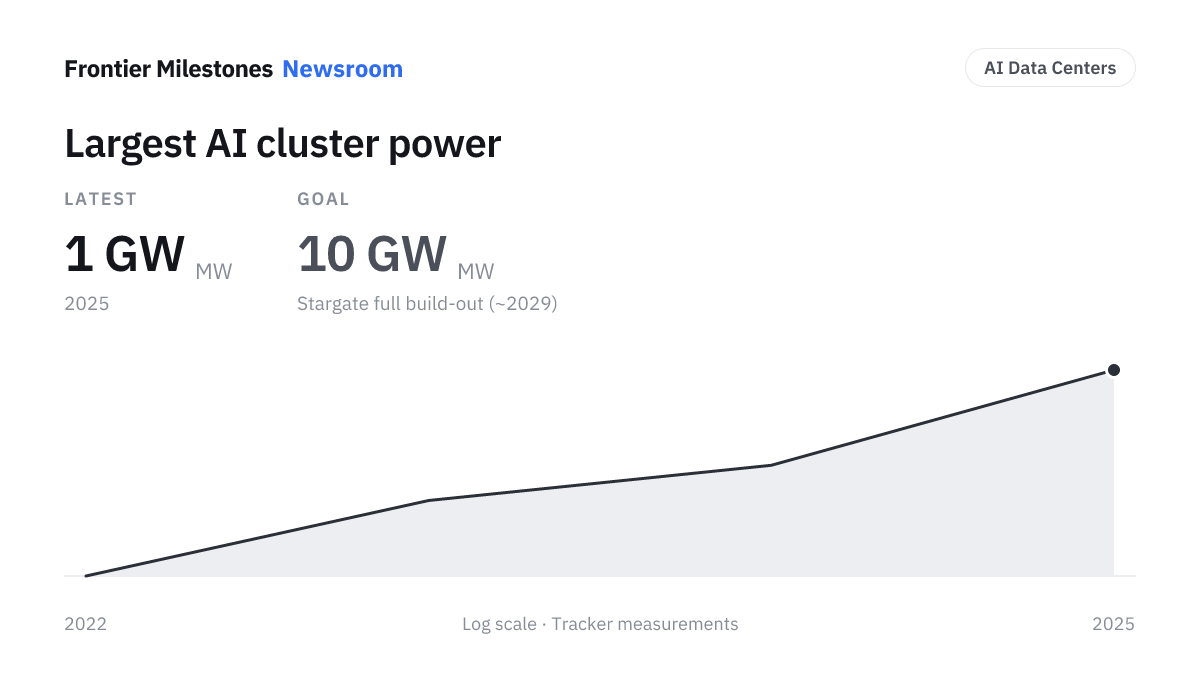
Frontier clusters went from 150 MW in 2023 to gigawatt-class in 2025, and the binding constraint is now power rather than chips. Four hyperscalers guide over $300B a year combined — the fastest capex ramp in corporate history.
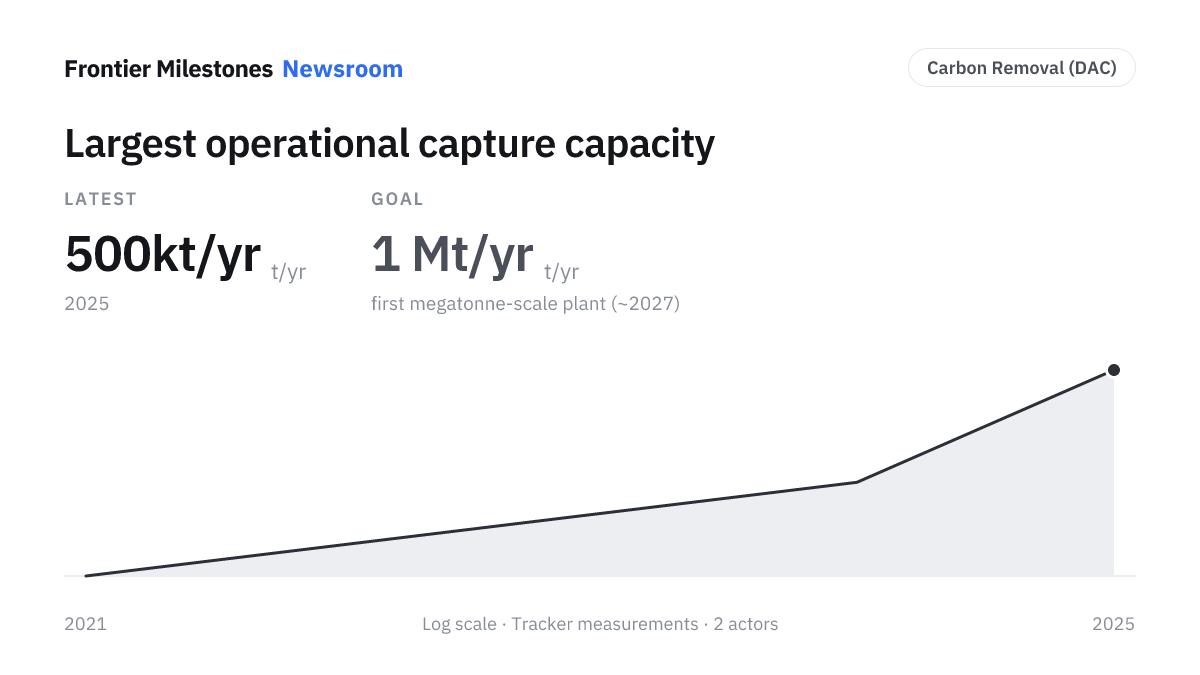
Capture capacity jumped from 4,000 t/yr in 2021 to 500,000 at Stratos in 2025 — a 125× scale-up in four years. Cost is the unsolved half: today's plants run $400–1,000 per tonne against a $100 target.
Microsoft is replacing OpenAI and Anthropic models with its in-house MAI models for tens of thousands of weekly prompts in Excel and Outlook — an incremental cost move, not a break: the partners still carry most Copilot traffic.
Microsoft accelerated its Quantum Safe Program, targeting post-quantum cryptography across critical products and services by 2029 — saying quantum advances have moved the risk horizon closer than previously expected.
Multiple researchers — and a Reuters report — questioned Microsoft's topological-qubit results, citing unresolved measurements and code errors. Our read: the milestone thesis is contested, not settled.
Our read — labelled opinion, not investment advice.
Microsoft — Microsoft contracted multi-million tonnes of durable removal across suppliers — the demand that underwrites the buildout, making CDR a real market.

 Atom Computing
 IBM
 IonQ
 Helion Energy
 xAI
 Meta AI
 Climeworks
 Occidental (1PointFive)
 Heirloom
 OpenAI
 Anthropic