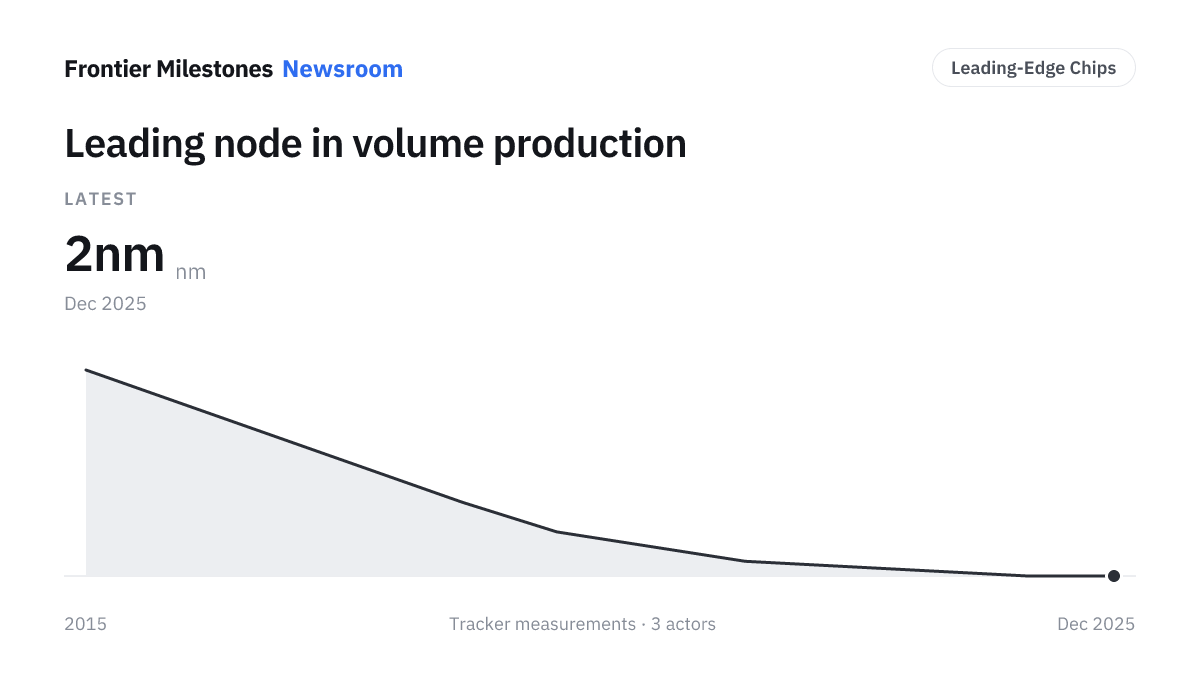
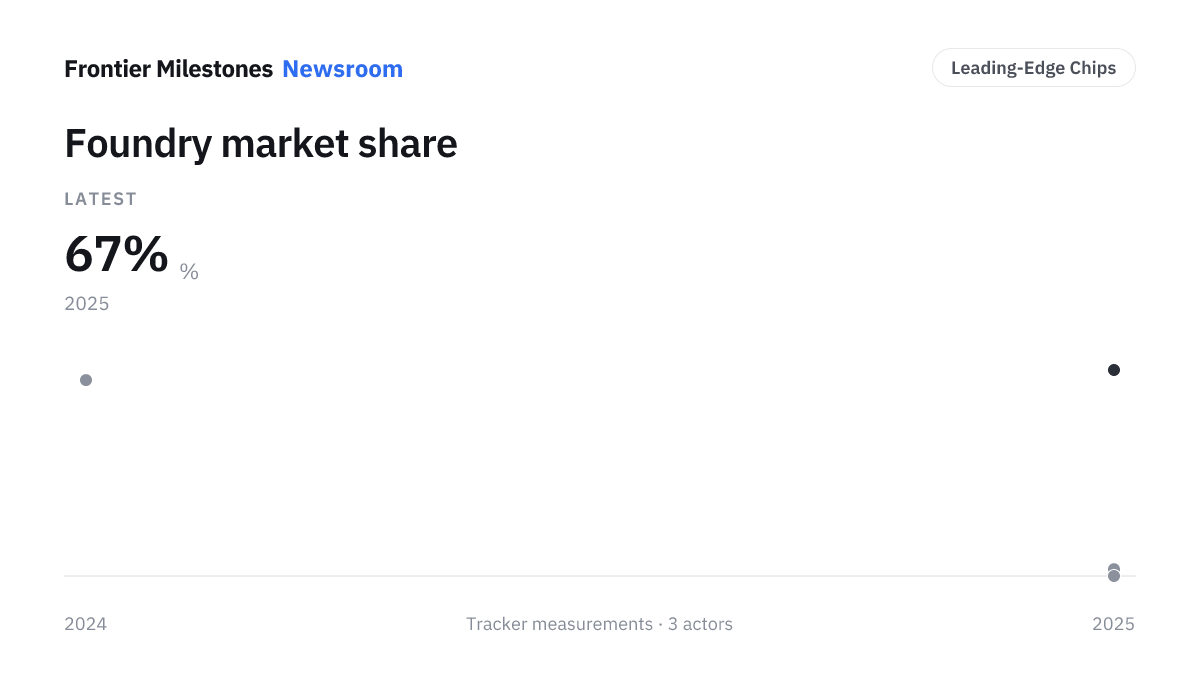
All three leaders reached 2nm-class volume in 2025, but TSMC holds about two-thirds of the foundry market and spends ~$40B a year to keep it. IBM demonstrated a sub-1nm transistor in 2026 — a research result roughly five years from production.
Industry reports say Samsung, SK hynix and Micron have booked out their entire 2027 DRAM and HBM capacity, closing allocation talks months ahead of schedule. Buyers are reportedly receiving only 60–70% of requested volumes and are locking supply through three-to-five-year agreements with advance deposits.
Nvidia and SK Group announced a $500B+ initiative spanning AI data centers and next-gen memory. It pairs a long-term SK hynix HBM4 supply-and-co-development partnership with an SK Telecom 2GW data center (Vera Rubin chips, HBM4) online from 2027, plus Naver/Brookfield and Hyundai Genesis autonomy tie-ups. Samsung is also in on chip/memory design.
South Korea unveiled a government-led national plan pledging over $576B across semiconductors, AI data centers and physical AI — anchored by Samsung and SK hynix, who will each build two new HBM-focused fabs. This confirms an earlier ~$646B report (a separate framing of Samsung group capex).
TSMC holds ~two-thirds of the market and the yield lead; Intel is betting its comeback on 18A; Samsung trails on yield. Our read on a race where one player's dominance keeps compounding. (Our opinion, not investment advice.)
Our read — labelled opinion, not investment advice.
No part of a "2nm" chip is 2 nanometers. Node names are marketing labels, not physical measurements — so we read them alongside transistor density and who is actually shipping in volume.

 TSMC
TSMC  Intel
Intel  SK hynix
  Micron
  NVIDIA